
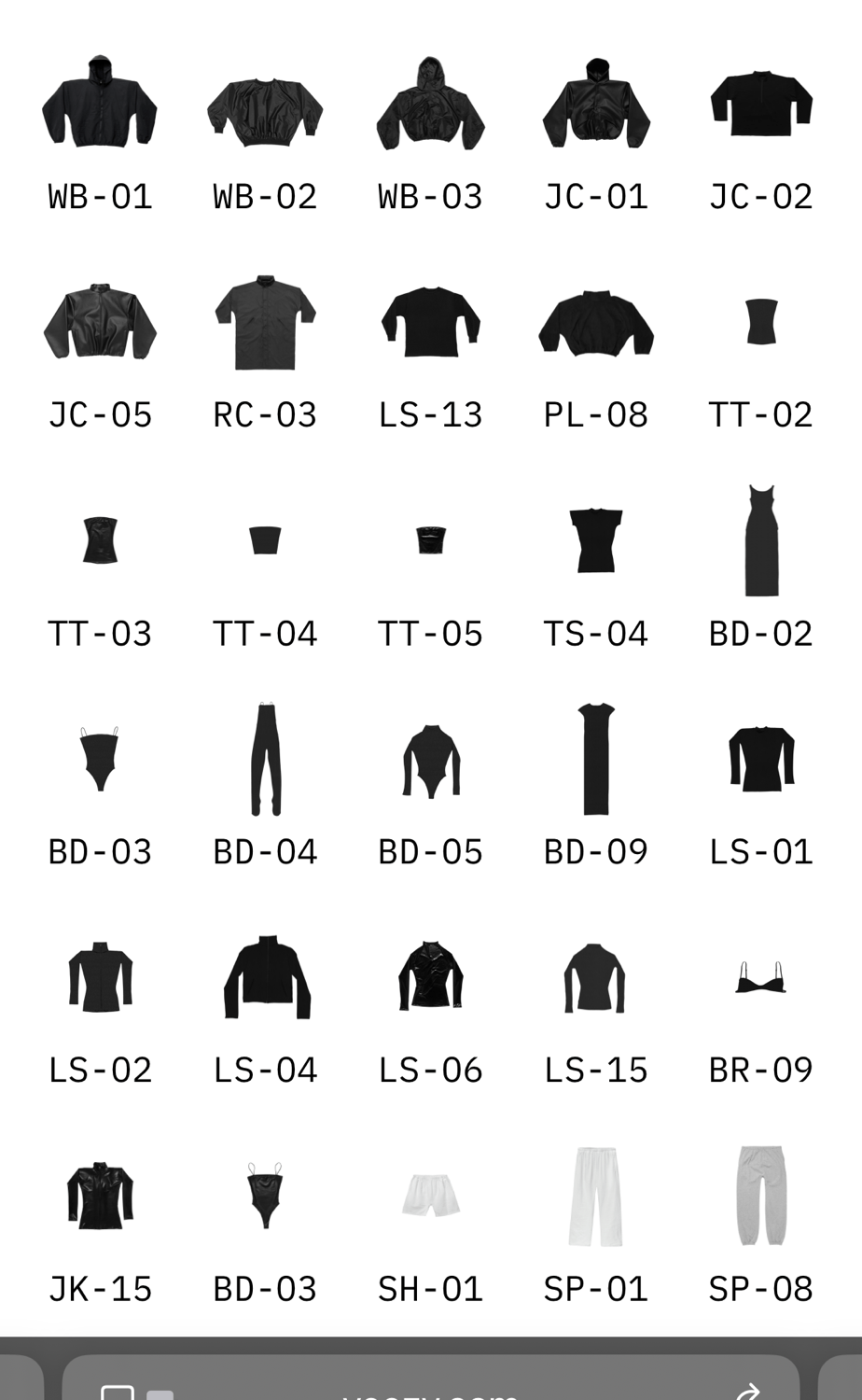
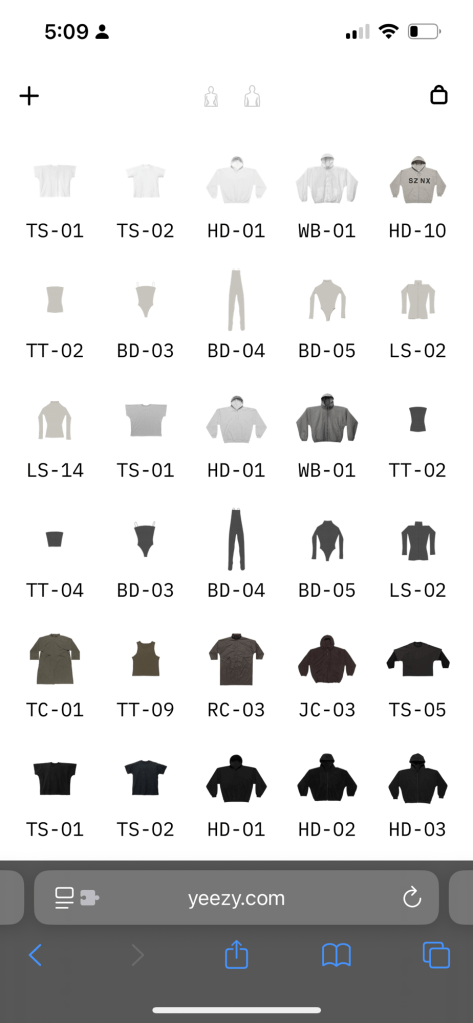
Go to yeezy.com and the message is clear: the clothes are the statement. The homepage feels like a gallery. Every piece laid out with no extras. Select an item and you’ll only see the product name, the price, and a size selector. No oversized logo, no campaign text. Just the garment.
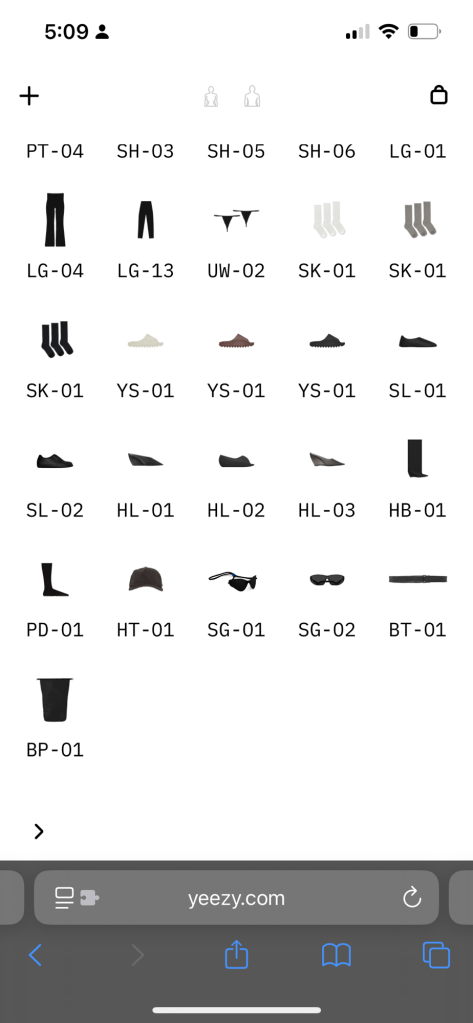
That same stripped-down energy extends to the business model. With Adidas officially done liquidating the last of its Yeezy inventory (Vogue Business), there’s no wholesale pipeline left. Ye isn’t flooding department stores or chasing retailer racks. Instead, it’s direct-to-consumer—straight from his warehouse to whoever’s ready to tap “+” on the site.
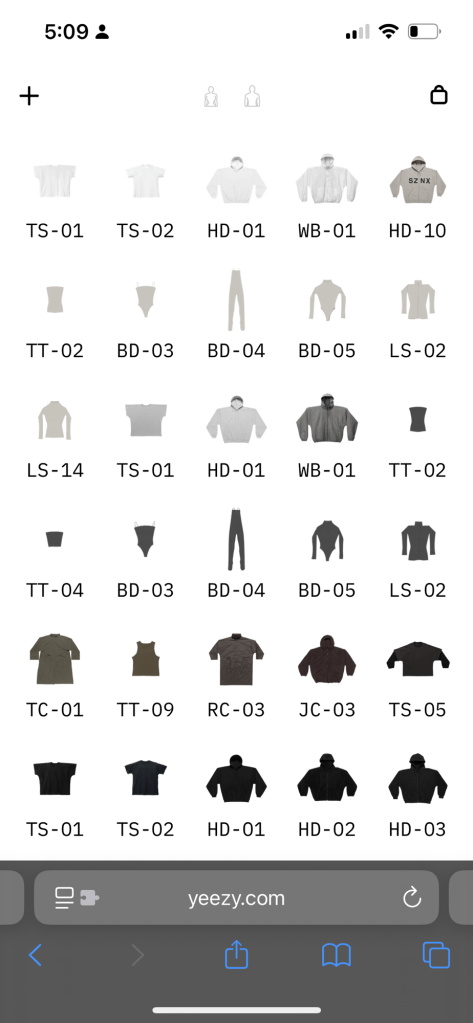
It’s bold, but it makes sense. If the clothes don’t need labels, why should the brand need a middleman? Yeezy has always been about recognition without introduction. The silhouette, the texture, the product codes—that’s the language. Wholesale would only add noise to something meant to be quiet, deliberate, and instantly recognizable.
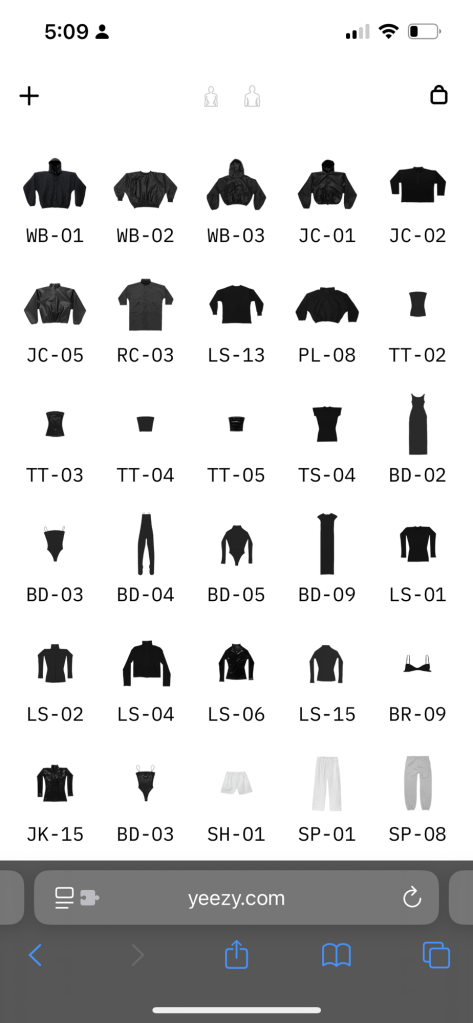
In fashion, a lot of labels scream to be seen. Yeezy proves you don’t have to yell to be heard.
 Exploring the intricacies and nuances of music, fashion, art, culture, and human behavior.